

Get smarter about food business and food innovation - in just 3 minutes.
Welcome to VITAMIN C®. Every other week in your inbox.
If you find this newsletter valuable, please share it. Your network will thank you.➞ Sign up here.
Read time today: 2:34 min
Hi friend,
It’s Friday morning. You are reading VITAMIN C 🍋.
There are 5M+ posts this week about food business and food innovation. I hunted down the 5 that deserve your attention.
Here they are:
1. [Science | Report] 🍊 The quiet power of placement

I've been in enough supermarkets to know: the first thing you grab is rarely what you planned to buy.
A new UK study tracked 580 shoppers across 36 stores. When fruit and vegetable displays were moved closer to the entrance, sales rose by 2,500 additional purchases per store during the intervention.
This effect mostly worked in a short-term period (didn't hold at six months post-intervention). Nonetheless, this study shows supermarkets are choice architects. And most of us have no idea how much they're deciding for us.
Read the full study here.
2. [Insight] 🎂 Cold email is out, Cold caking is in!

Everyone is automating outreach emails. Sequences, personalisation at scale, AI-generated follow-ups. As a result, we have inboxes that feel like spam folders before you even open them.
This guy tried the opposite.
He sent 20 cakes to 20 companies, and it totally worked!
$2,000 worth of cakes ($100 each)
5 immediate responses
Each client worth around $40,000 each
It worked because it was unexpected and more human.

Food has always done that. It creates a moment. It gets shared. It's hard to ignore a cake when it's sitting in your office kitchen at 10am.
3. [Insight] 🟣 The #1 ingredient trend 2026 is ube

The purple yam root from the Philippines exploded as a trend in the US last year. All major US retailers now carry ube products. There are even ube street festivals in LA and New York.
The trend is slowly arriving in Europe too. Starbucks added the ube vanilla flavour to its German menu two months ago. And TikTok feeds are shifting from matcha green to ube purple.
What makes ube so interesting?
The color is impossible to ignore. Purple works on social media like almost no other food tone.
The taste is approachable. Mild, slightly sweet, somewhere between vanilla, nuts and white chocolate.
The application is flexible. As a powder or paste it's easy to use in drinks, desserts, baked goods or ice cream.
That's exactly the profile that turns an ingredient into a trend today.
Matcha took years to reach Europe. Pistachio got there faster. I'm confident ube will find its way onto our supermarket shelves before the end of this year.
4. [Insight] 🍫 Packaging as a digital detox tool
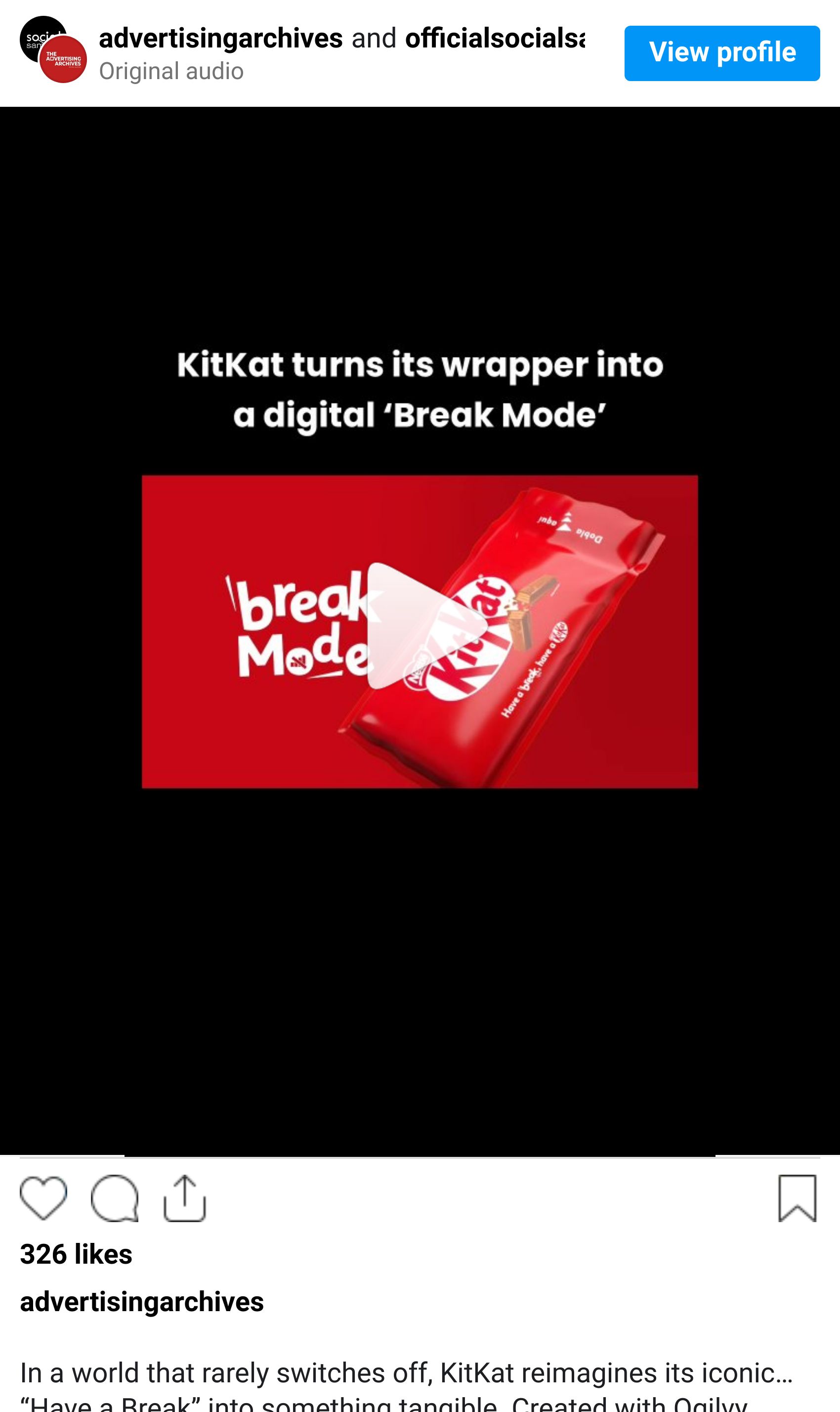
KitKat has been telling people to take a break since 1957.
So KitKat built a wrapper that forces the point. The limited-edition "Break Mode" packaging uses Faraday cage technology to block your phone's signal when you slide it inside. Calls, data, Bluetooth, GPS - all blocked.
The wrapper is reusable for roughly a year and designed to be recycled after.
What I find interesting here is not the technology. Faraday cages are not new. What's interesting is the object. A chocolate wrapper that becomes a tool. Packaging that does something beyond containing a product.
We talk a lot about functional food. Now there is functional packaging too.
5. [Inspiration] 💡 The most common mistake in product pitches

Many product pitches make the same mistake.
They starts with the technology. The features. And the person across the table is politely nodding while checking their phone under the table.
Nobody cares what you built. They care what it solves for them.
Flip the order.
"We provide X for clients in category Y" becomes "For companies struggling with X, we solve it with Y."
Same information. Different starting point. Completely different response.
Stay awesome,
Lia

How did you like today's email?
Enjoyed this newsletter? Let’s keep the conversation going on LinkedIn!
Or forward this email to a food-curious friend - because good ideas are better when shared. 🙌